Showing posts with label sexism. Show all posts

Link: Blaming Rape Culture on Social Media

Posted by Alexandra Salazar on Thursday, October 10, 2013

Thinkprogress' Tara Culp-Ressler reports on the blaming of rape culture on social media. Every media major and sociology major who reads it groans (or ought to groan) in recognition and agreement:
The takeaway from these students’ comments is that it was a very bad decision to put these things on the internet. Their statements aren’t actually condemnations of the attitudes that fuel rape culture in the first place, or expressions of horror that some women at the university have likely been subjected to these “rapebait” strategies. They’re expressions of concern that the frat brother has attached his name to something that fraternities are supposed to keep behind closed doors, something that might hurt his job prospects in the future.
Blaming social ills on modern media, technology, or progress is nothing new. No, really. It is not new. It is literally one of the oldest things that people have done.
"Times are bad. Children no longer obey their parents, and everyone is writing a book." - Marcus Tullius Cicero (106-43 BC)
While it is true that social media reflects the social climate, and may be used to promote rape culture, rape culture is older than social media. It's a part of patriarchal dominance of culture and has only found a new expression, not a revival. There was no death of rape culture to begin with. It's not new.
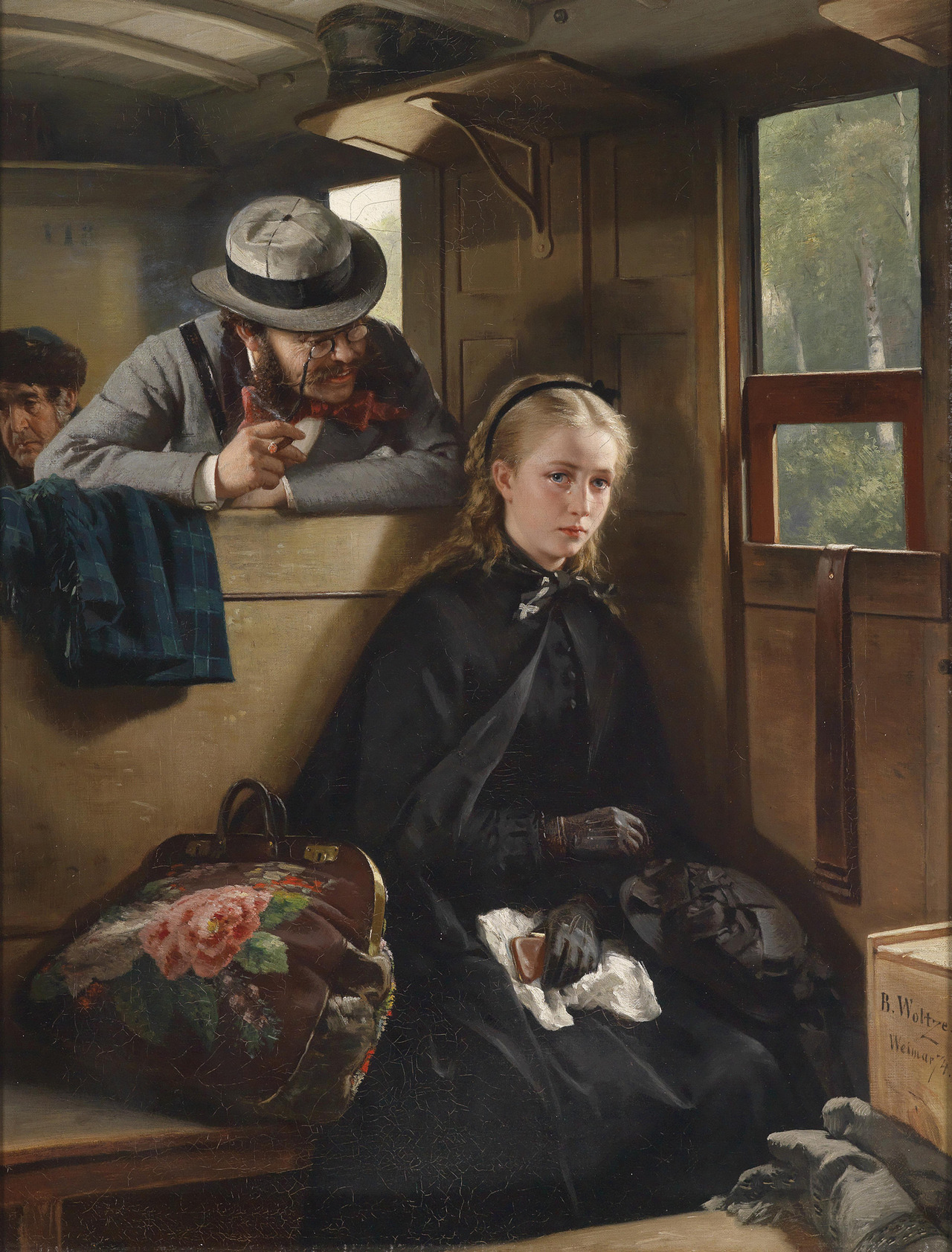
The Irritating Gentleman, Berthold Woltze, 1874. This young woman is probably in mourning, and this man still thinks she ought to give him a smile or respond to his catcall anyway.

It's been proven that blaming violence on comic books wasn't scientific or at all supported by reality. Violence predates comic books, certainly. Sexism and a culture that endorses sexual harassment are also older than our modern media.

They might even be older than Cicero.
More about → Link: Blaming Rape Culture on Social Media

Link: Demanding Representation of Black Girl Nerds in Geek Culture

Posted by Alexandra Salazar on Wednesday, October 9, 2013

When Chaka Cumberbach asks her readers to name some black female superheroes, she mentions that the nerdiest among us might forgo Storm and remember Bumblebee, Nubia, or Misty Knight. However, for anybody less comics-savvy, those names are probably unknown.

True fact about me: When I was little, I thought Storm was the coolest of the X-men and I don't redact this at all today.

She also relates her own childhood as a black female nerd, and connects the issues. It's a fact that mass media doesn't adequately represent women of color. But what is the impact of this narrative, that your heroes don't look like you, on the people growing up listening to it?
We’re given so few characters that I’ve always felt that if I wanted more, I had to be grateful for what I’d been given and put my money where my mouth is. But I’m not going to lie –- that strategy doesn’t seem to be working. I’m getting really tired of just accepting whatever scraps are thrown our way. I’m completely over struggling to find the silver lining in an obvious token black character while on the other end of the spectrum, people who have never had to think about finding racial representation in popular culture feel justified in raising hell over color blind casting in a sea of predominately diversity starved movies -– yeah, I’m looking at you, people who acted like Rue’s casting in the Hunger Games was a personal slight but interestingly enough seemed completely OK with the damn near catastrophic white washing in "Avatar: The Last Airbender."
It's a fact that watching television reduces self esteem in children for every demographic except white males. And yet, the stereotype of a 'nerd' is a white male. Is it any wonder that many 'nerdy' or 'geeky' culture artifacts are media-based, then? Is it any mystery that these media-heavy cultures are exclusionary to women of color, when it's so difficult to like what you like without feeling awful about it, unless you're the dominant cultural demographic?


More about → Link: Demanding Representation of Black Girl Nerds in Geek Culture

Comment Box Beatdown: A New and Violent Dialogue.

Posted by Alexandra Salazar on Sunday, September 29, 2013

I'm going to assume that almost everyone reading this knows what a comment box is. There's one below every post here. Bastions of free speech: moderated comments allow anyone who cares even a vague amount to express their opinion to everybody who passes by. In the least calm and rational manner possible, in some cases.

It sort of looks like this. (Photo: Flickr user sokup)

The crux of every social media site includes comments, along with media sharing. Even sites dedicated to user-generated (rather than shared) content communities, like Deviantart, Fictonpress, Ravelry, and Etsy include comments as a focal part of their platform: allowing anyone to create written, art, or craft work and then receive feedback on it from a general audience.

As mentioned yesterday, audience feedback is a dialogue that has taken on a new form and sense of power from the presence of the internet. Fan approval or outrage can sway the sales and distribution of media, and either laud or revile the personalities that talk about it.

I'm talking about critics. The push-button-to-hate culture doesn't make it easy for them to handle what essentially is considered the general public's beloved baby.

Why did you downvote my baby?! (Gif: Spirited Away)

The fifth installment of the popular video game franchise Grand Theft Auto was recently released, after about five years of development. Fans were elated to get right back into the popular wide-open no-consequences sandbox game and start stealing cars and running over grandmas.

Then Gamespot, popular gaming community hub, rated the game a lowly 9/10.

The resulting backlash of not getting a perfect score was so great, Gamespot made a response video calling out the chaos.

Pictured: Gamespot's audience gets told.

As the host of Feedbackula eloquently states,
"There were so many comments this week saying that political discourse doesn't belong in game reviews, or that it's 'just a game' and 'we should just shut up and deal with it.' Really though, honestly, what kind of attitude is that? How does that make the gaming community look? If we ever want to see games being broadly accepted as an art form, or as anything but a slightly quirky pass-time, we have to include politics. we have to ask questions about gender, about the portrayal of characters, and about the limits of satire. Because satire isn't satire if it doesn't challenge the thing it copies; that is repetition."
As most readers can probably infer, the non-perfect score was awarded due to the limited roles of women portrayed in the game: as unsatisfied wives, hookers, straw-feminists made to mock actual strives towards gender equality, and other less-than-empowering roles. The messenger of this dissatisfaction was Carolyn Petit, a game journalist who also is a trans woman. This went over as well as one could expect in a largely unprogressive, male-dominated gamer culture.

Not well. (Creative Commons)

The theme of an insecure male-dominant fanbase (despite over 40 percent of gamers identifying as women) being uncomfortable with women being an authority on the games they are possessive of is pervasive and certainly nothing new. Raging fans created a petition to try and get Petit fired from Gamespot (since removed). Anita Sarkeesian, feminist media critic and host of Feminist Frequency received death threats for daring to make a video series commenting on sexism in video games, and one maladjusted individual even created a whole flash game about battering her.

Trying to fire Petit, and trying to silence Sarkeesian, are two unorganized, organic efforts to try and subdue a discourse that some consumers find threatening to their worldview. The studios that make these games, have nothing to do with this dialogue; consumers are yelling at other consumers, through the easy-reward-low-investment-low-accountability interface of a comment box.

Youtube is trying to clean up the veritable hive of scum and villainy that rests below every flash player on their site. Their approach involves algorithms that sort comments, burying the least valuable ones to humanity below ones that at least don't wear underwear on their heads. Theoretically, this is supposed to limit visibility of frustrating comments, so nobody reacts to them and their presence is not rewarded, discouraging their presence. Whether this is censorship is debatable. By trying to encourage people to link their google pages accounts to YouTube, Google has tried to reduce the shield of anonymity on offensive comment trolls, but with limited success.

The determination and free time of angry internet trolls are limitless, however, and one can only imagine how long it will take for someone to invent a web gadget that restores the comments to how they were before. Whether this is in defense of free and unrestricted speech, or over-entitlement to the right to call people fags behind an anonymous mask, only time and downvotes will tell.
More about → Comment Box Beatdown: A New and Violent Dialogue.

Redefining Lines: 'parody' videos and their discourse.

Posted by Alexandra Salazar on Thursday, September 26, 2013

I'm not sure you can toss a stone on the internet without hitting somebody mad at Robert Thicke right now. Whether it's people defending his song Blurred Lines (and it's top spot on R/B charts) or ripping it to shreds, the blogosphere is eating it up.

For anyone still in the lurch, Blurred Lines and it's music video is a catchy hit that proclaims that the line between yes and no in sexual situations is 'blurred.'

Pictured: music video pretty much everyone will agree is sexist.

This philosophy is famously unpopular with progressive consumers, leading to intense outcry in the wake of Blurred Lines' popularity. Accusations include that the song promotes rape and rape culture, that the video objectifies women, and overall the combined effect is simply just too creepy. 

However, something interesting to come out of this are the multitudes of video 'parody' songs that satirize the message in Thicke's song. 

Here's the Law Revue Girls turning the tables and flipping the video's gender roles, combined with a pro-feminist message:
Pictured: a very inopportune video preview but a fairly empowering video.

Here's YouTube artist Bart Baker, who specializes in these parody songs, turning nearly every #1 hit into a comedy. This video has over 8 million hits:
Pictured: Less empowering, but does raise some good points about the video.

The song's tune was even adapted to popular TV shows and other fandoms, riding on the song's popularity. Some fans show their love for Doctor Who and forget the unfortunate naked women business:
Pictured: Their enthusiasm is adorable but nobody here should quit their day job.

This trend didn't begin with Thicke, of course: previous hits like Gagnam Style, nearly everything Lady Gaga has ever produced, and beyond have had loving fun poked at them. The genre might even be traced back to Weird Al Yankovic, who supplemented his weird and wacky albums with much-beloved parody songs of popular releases. To have a Yankovic single is even considered a badge of honor by some artists.

Under Fair Use, anybody can make a parody video without risk of legal action.

However, I think something interesting happened with Blurred Lines and its spoofs that rarely has taken place with other jibed material. The parodies on whole aren't loving. Anything but: the overwhelming message of the satire directed at this song is hateful, and it can be argued rightly so. Despite Thicke's success in the charts, his reputation has been forever tarred by the dialogue these spoofs open up.

Other media that's been poorly received (despite monetary success) by the public has been given the same treatment, even more dramatic treatment. In the case of the much-detested Twilight series, a whole satirical movie was made in protest of the themes and uncomfortable plot devices it popularized:

Pictured: Dislike strong enough to fuel an actual movie release.

Satire as not only a means of criticism from certain formal sources (See: the Daily Show, MAD magazine), but as a publicly-available weapon against toxic or hostile messages is an essential part of our modern storytelling landscape. It's one thing to publish criticism, to write protesting articles, to leave poor reviews, but it's another entirely to speak back in culture's own language.

"Hey baby," slurred Blurred Lines, a Solo cup full of tequila sloshing in one fist, "What'chu doin'?"

"You're catchy, but piss off," the public replied, and slapped the hit single's wandering hand off its vast and disapproving thigh.

More about → Redefining Lines: 'parody' videos and their discourse.