Showing posts with label fandom. Show all posts

Boycotting the Ender's Game Film, I.E. Trying to Abort a Problematic Franchise

Posted by Alexandra Salazar on Tuesday, November 5, 2013

If you're a fan of Science Fiction, and even if you're not, you should already know a few things about Orson Scott Card's Ender's Game. One, that it is famous in that pseudo-classics-written-by-a-white-dude way, and two, that Orson Scott Card is incredibly homophobic and a bigot.

Oh, and also the book is getting a big budget movie production.

The one in my middle school classroom bookshelf did not have the red sticker.

However, point two about Ender's Game is a point of guilt, especially in light of point one. Some have tried to defend seeing the film by stating that Card won't see any of the box office revenue. Even big-name actors are trying to defend the film in spite of its problematic creative origin. Others aren't buying it.

Sarah Nelson, NZ NaNoRiMo champ and blogger, delivers a convincing argument on why she's personally not swayed by the apologetics:
As for their claim that “neither the underlying book nor the film itself reflect [OSC's] views in any way, shape or form”? I agree completely. If OSC was dead and his work in the public domain, there’d be no problem with an Ender’s Game film.
But Orson Scott Card still makes money off his books. Film adaptations inevitably increase book sales. The more popular the film, the more popular the book. According to this article, Nicholas Sparks’s Dear John sold 1 million copies in the year of the film adaptation’s release — out of 2.4 million copies overall. When the first Harry Potter movie came out, the book more than tripled in sales.
This is an excellent point and part of the reason why I personally also am boycotting the film. But it also pokes holes into misunderstandings that I suspect many people hold about the nature of media, and especially that of franchised works.

Media is inter-connected and so is our consumption of it. Meaning, that while things like releases and media venues are singular, the way we actually consume those things are tightly linked. Someone who goes to see a music show and likes it is likely to see more in the same genre. Someone who sees a film they like and discovers that there is a book, is likely to read that book.

This is the basic principle that makes sequels, expanded universe entries, remakes, and other consumer media expansions profitable. It's also what prompted the creation of fanzines, and in the modern day, online fan communities and fanfiction archives.

When we like something, we want more of it.


But this doesn't just apply to new material being made, it also applies to the backlog of material that already existed when a new work is released.

When any work goes multimedia and consumer-targeted, it becomes a franchise. And franchises make money. We may love the material, and want to deny that fact, but that's what they exist to do.

I personally do not support enfranchising Orson Scott Card.

More about → Boycotting the Ender's Game Film, I.E. Trying to Abort a Problematic Franchise

Real Modern Day Myths

Posted by Alexandra Salazar on Sunday, October 20, 2013

Just because we make up our own new pantheon, doesn't mean the old's gone. In fact, one of the prevailing inspirations for fiction is mythology: both ancient, and modern folklore. For a single example, David Pfanner wrote a whole thesis on the modern incarnations of King Arthur: reinterpreted and rehashed in comics, movies, literature, TV, and more. Aside from the literature aspect (think: Le Morte d'Arthur, by Sir Thomas Mallory), right off the top of my head I can name a few contemporary low-culture examples. I think there was a syndicated cartoon in the '90s from when I was a child, King Arthur and the Knights of Justice. There's definitely that HBO series Merlin. And of course, the classic Monty Python and the Holy Grail

On second thought, let's not go to Camelot. It is a silly place.

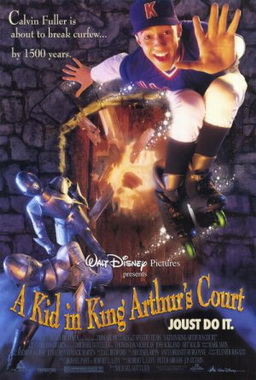
But this isn't an isolated thing. Thor is a Marvel superhero, Disney's Hercules won four Annie awards in 1997, and any kid in the 2000s who was into trading card games could tell you that Yu-Gi-Oh! superficially claimed to have an ancient Egyptian theme. The integrity of the original material in all of these is patchy at best, but they stick in our imagination, anyway. They're just grounded in pre-existing narratives enough to be vaguely familiar, and therefore meaningful. No matter how much Arthurian scholars writhe at A Kid in King Arthur's Court.

He was no Connecticut Yankee, that's for sure.

I think we can look at Sherlock Holmes to see this kind of thing in action again. Sherlock Holmes is the fictional character who has been portrayed by the greatest number of actors. There's been dozens of TV shows, from Cushing to Brett, to now Cumberbach. There's been movies to suit every generation, the most recent featuring a garrulous Robert Downey Jr. There's been Japanese anime series, from Sherlock Hound, several episodes of which were directed by Hayao Miyazaki, and Case Closed, with a protagonist inspired by Doyle's tales. There's been western animation: Disney's The Great Mouse Detective, and a DIC series Sherlock Holmes in the 22nd Century. This is to say nothing of the vast library of literary Sherlockania stretching back even to before the ink was dry on half of Doyle's original serials. Star Trek was on Sherlock, too, giving us the lovely image of Lieutenant Commander Data in a deerstalker hat.

Marvelous.

I think it is safe to say that humans will repeat what they like, and things become part of our mythology because we like them.

This raises another interesting connection, however: what is the difference between these adaptations, and the much-mocked, lowly fan fiction story.

I would argue that all of these things are actually fan fiction, too. Only that money has gone into their making, that they have been published and so are accessible and therefore respectable to audiences to consume, and that Sherlock Holmes and mythological sources are in the public domain and therefore there is no issue of copyright.

But fan fiction's a post (or series of posts, or a series of series of posts!) in of itself. For now, we'll content ourselves with the fact that in several hundred years there probably will be rampant and unchecked retellings of Star Wars and Titanic. We will probably be very happy we didn't live to see them.
More about → Real Modern Day Myths

Link: While Superheroes Conquer Media, Comic Books Battle Stigma

Posted by Alexandra Salazar on Sunday, October 6, 2013

This article by Melissa Rayworth of the Arkon Beacon Journal reports well on a very strange phenomenon: the mass-media bullies that once and still bully comics for being either too childish or too adult, too intellectual/nerdy or too uncultured, are cashing in on comic book idols. Meanwhile, comics themselves don't enjoy as much cultural uplift as the over $150 million gross of Marvel's The Avengers would suggest.

They've certainly cleaned up some, but it took way too long for Ant Man and Wasp to get a movie.

Rayworth quotes con-goers on their thoughts:
“If you tell somebody you read Captain America now, they know who you’re talking about,” said Sims, who blogs at websites including ComicsAlliance.com. “The characters’ being visible lessens the kind of stigma of reading comics, because people know those characters and have affection for them.”
But only to a point. Amanda Osman-Balzell is a married opera singer raising a toddler daughter while attending graduate school. When new friends visit her Tempe, Ariz., home, they raise eyebrows at her stash of comic books. 
“They see that we have comic books,” she said, “and they look at us like, ‘Really? You guys look so normal.’ ” 
She explains that many of today’s comic books boast intricate artwork and story lines far more complex and thought-provoking than their big-screen counterparts. But friends roll their eyes when she describes comics as “literature.”
There's no denying that comics have had a spotted past when it comes to integrity in storytelling. Any comic book fan can bemoan the ridiculousness of the Silver Age, and the un-needed darkening of beloved icons in recent decades.

And whatever this is. (Tarot/3 Kittens #74)

But is this really any worse or different than other forms of media? Surely written media has endured The Eye of Argon. Radio shows once were obligated to include advertisements in their actual fiction content (resulting in many a baffling radio drama about dish soap, for example). And is it any worse than television, with Toddlers and Tiaras?

Comics as a medium are older than television. And yet, television is now an ubiquitous part of our media culture. What's held comics back? Is it really the superheroes, when they score millions at the box office?

Or is it us?
More about → Link: While Superheroes Conquer Media, Comic Books Battle Stigma

Talk Nerdy to Me.

Posted by Alexandra Salazar on Tuesday, October 1, 2013

There's a fairly popular cultural meme that there isn't just a nerd, there is a super nerd, the one who knows Klingon and can speak it, too. Perish the thought of this being for squares only. Stephen Colbert can speak Quenya.

Here's a handy introduction to these 'constructed languages,' or 'conlangs.'

Pictured: People with lots of time on their hands.

An interesting note, though: the American public often finds other languages intimidating. Constant groans of 'when will <immigrant population of the decade> learn to speak English?' can almost be the cartoon of everyone's racist grandfather. Junot Díaz, author of titles such as The Brief Wondrous Life of Oscar Wao and This Is How You Lose Her has this to say on criticism of his works' inclusion of Spanish:
Motherfuckers will read a book that’s one-third Elvish, but put two sentences in Spanish and they [white people] think we’re taking over — Junot Díaz
Exoticism has gone hand-in-hand with foreign languages for English speakers for decades. We call French the language of love, but is 'omlette du fromage' any lovelier than its English counterpart? What is our (sometimes appropriative) fascination with the mystery and intrigue of other languages, and is it any wonder that such a passion translates into learning the tongues of peoples who never even existed?

These languages are often expanded greatly by an adoring audience, in an attempt to literally talk back to the source material in the languages it brought to life.

And, languages are also our way of connecting with other people. Just because a culture is fictional does not mean that one would never want to connect with that media, and the personalities within.

pedo mellon a minno

More about → Talk Nerdy to Me.

4 Rules to Make Star Wars Great Again: Fans Lay down the Law

Posted by Alexandra Salazar on Saturday, September 28, 2013

If there's anything that permeates childhoods spanning the last 30 or so years, it's probably Star Wars. Whether you're a fan, or if it's 'that science fiction series' to you, you probably know the names of the characters. You probably know who Darth Vader is.

You also probably know that the three 'prequel' movies released between 1999 and 2005 weren't well-received.

You might even know that a third trilogy, a sequel series, is slated to begin release in 2015 with a release every 2 years.

The marketing and animation company Sincerely Truman has something to say about all of this.

Pictured: Some really good points about why the prequel series flopped.

As of this post, the main video site DearJJAbrams.com, has over 5300 supporters. However, this is more than a needy public voice demanding content from producers and directors. This raises questions. Is the public entitled to be pleased? Are the creative decisions of a content creator like a director or artist subject to be influenced by the wishes of fans? And is it a good idea to give fans what they want?

Videos like this one, as well as other similar criticisms, are a seemingly one-sided dialogue attempted between content consumers, and content creators. And they are not always unsuccessful: after an ending almost universally-regarded as terrible, public outcry convinced Bioware and EA's Mass Effect 3 developers to add DLC content to their game that modified the ending somewhat. Ethical debates about false advertising popped up; the game promised different endings based on player choices, and yet all of them shared nearly the same ending with some lighting colors changed. They didn't do this with pleasure, but to avert future disgrace with their primary consumer base. And even then, they didn't change much.

Outraged fans were called 'rebellious' by news media, and much-mocked even within game culture, to the point of other developers changing endings to mock the 'spoiled brat' public. Was the public over-entitled? Was the studio lazy, advertising false material and subsequently got called out for it? Do we spoil fans too much by listening to their demands, or are content creators spoiled too much: their final decisions protected from all criticism and consequence by artistic integrity?

This concept isn't new, despite it's shiny and new internet guise. Arthur Conan Doyle killed off Sherlock Holmes in The Final Problem in an attempt to end his series. After resisting public pressure for 8 years, he wrote The Hound of the Baskervilles to appease his raging 1901 fans, setting it before Holmes' 'death.' This didn't work. He wrote The Adventure of the Empty House and brought Holmes back to life after 2 more years of public displeasure. Today, The Adventures of Sherlock Holmes are considered literary classics, and much-beloved. But what of the behavior of the very first fandom? Was it right? Even in the long-run?

It's impossible to say if J.J. Abrams will heed or ignore fans, but it is reported that the sequels are being developed with fans of the original Star Wars trilogy in mind. On one hand, this is a relief for people who felt the sequel trilogy 'ruined' their beloved Star Wars. On the other hand, this approach may exclude things fans never knew they may want, and at least some of the surprise about what to expect.

Regardless of the approach, the $307,263,857-domestic gross legacy prays for Episode VIII not to swing and miss.

Pictured: By a margin of approximately 20 inches.
More about → 4 Rules to Make Star Wars Great Again: Fans Lay down the Law