Link: Book Reveals Youth's Views of Politicians

Posted by Alexandra Salazar on Saturday, November 9, 2013

Being involved or informed with politics is incredibly powerful, even if government is a depressing topic for many. Socially, few more powerful demographics exist than young people, save for corporations and their lobbyists. But to go with the reality that shook the 2008 and 2012 presidential elections, the youth demographic is typified as disenchanted and apathetic to politics, which is just as often stereotyped as an old man's game.

A book published by Professor John Street, Dr Sanna Inthorn and Dr Martin Scott, seeks to dispel ideas that young voters have no sense of care about politics.

Personally, I wish that it didn't top off at nearly 100 dollars on Amazon, but then how would they make money off college kids who need it for their courses?

Of note to me personally, the book does this by examining research about popular culture and media icons, and how young voters (aged 17-18 years old) in the UK see politics through the lens of that popular culture. By examining what young people thought about celebrity icons and if they could be 'trusted,' and then comparing those findings to what they thought about political figures, researchers like Professor Street could analyze how to appeal to younger demographics and even what might be wrong with current approaches at presentation in modern politics.

The linked article provides some interesting summary of the team's findings and some of their interview statements,
Politicians need to come across as people who care about and understand an issue, and young people like to know if someone's personal experience has informed their political views. Politicians willing to reveal a little bit about themselves, who explain why something matters to them, might not gain 'legend' status like certain musicians or celebrities, but might improve their chances of being trusted and listened to.
As a  young person myself, I wholly agree with this statement. A flaw of delineating on party issues, to me and to a lot of my peers is that understanding an issue is not a political statement to me, it is a pre-requisite for participating in a discussion at all. Much of the current political race is denial of facts and of realities that I and my peers face daily, in the most advantageous way as to appeal to party and corporate benefactors.

Many people my age can see right through politicians. You can pretend to us all you want about how much you care, but if the answer to the question, 'why are you here,' is 'because it's advantageous to me' or 'My peers think I will win the election for them and give power in the government back to their party' then we don't want that. It's an unsaid but obvious, painful throbbing reality that Street and his researchers seem to have stumbled upon: on average, younger voters want to see a personal connection to the issue.

And nothing is a more personal connection than the media we love, and the experiences we go through every single day:
"The links between popular culture and politics are dismissed when it is thought that popular culture diminishes politics, for example when politicians appear on television shows like I'm a celebrity get me out of here. The assumption is that what they are doing is a desperate attempt to appear 'relevant' or to revive a flagging career. "But there are times when these links are taken with the utmost seriousness. During the Arab Spring of 2011, much was made of the role played by music and musicians inspiring the rebellion in Tunisia or the crowds gathered in Tahrir Square in Cairo."
The media we love and the celebrities we watch and the shows we take seriously and the books we read as if they're our personal canon, matter. They are portraits of what we look for when we want something to enjoy and admire.

There's that old adage, 'be the change you wish to see.'

Well, we have hours and hours of media that's exactly what we wish to see. Why don't politicians look for something to be, there?

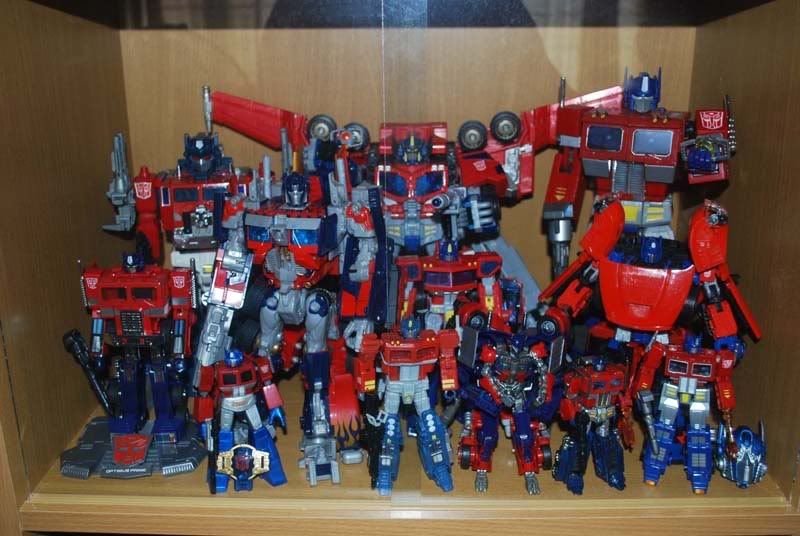
I absolutely promise that if you are a politician and you can pull off the presence of Optimus Prime, the wholesomeness of Superman, the kindness and duty of Steve Rogers, the responsibility and class of Captain Jean-Luc Picard, you're going to be all set.

And maybe the good looks of Tom Hiddleston, I think that would land you the tumblr vote.

And if you're not a white guy, which would be great, we need to use this fact that pop culture is relevant to make it absolutely necessary  to add more idols of color, female idols, that can have an impact in politics and beyond.

If pop culture is well-known to manifest in politics, then it becomes an imperative that pop culture be representative, else all we're going to do is promote inequality in politics.



More about → Link: Book Reveals Youth's Views of Politicians

Boycotting the Ender's Game Film, I.E. Trying to Abort a Problematic Franchise

Posted by Alexandra Salazar on Tuesday, November 5, 2013

If you're a fan of Science Fiction, and even if you're not, you should already know a few things about Orson Scott Card's Ender's Game. One, that it is famous in that pseudo-classics-written-by-a-white-dude way, and two, that Orson Scott Card is incredibly homophobic and a bigot.

Oh, and also the book is getting a big budget movie production.

The one in my middle school classroom bookshelf did not have the red sticker.

However, point two about Ender's Game is a point of guilt, especially in light of point one. Some have tried to defend seeing the film by stating that Card won't see any of the box office revenue. Even big-name actors are trying to defend the film in spite of its problematic creative origin. Others aren't buying it.

Sarah Nelson, NZ NaNoRiMo champ and blogger, delivers a convincing argument on why she's personally not swayed by the apologetics:
As for their claim that “neither the underlying book nor the film itself reflect [OSC's] views in any way, shape or form”? I agree completely. If OSC was dead and his work in the public domain, there’d be no problem with an Ender’s Game film.
But Orson Scott Card still makes money off his books. Film adaptations inevitably increase book sales. The more popular the film, the more popular the book. According to this article, Nicholas Sparks’s Dear John sold 1 million copies in the year of the film adaptation’s release — out of 2.4 million copies overall. When the first Harry Potter movie came out, the book more than tripled in sales.
This is an excellent point and part of the reason why I personally also am boycotting the film. But it also pokes holes into misunderstandings that I suspect many people hold about the nature of media, and especially that of franchised works.

Media is inter-connected and so is our consumption of it. Meaning, that while things like releases and media venues are singular, the way we actually consume those things are tightly linked. Someone who goes to see a music show and likes it is likely to see more in the same genre. Someone who sees a film they like and discovers that there is a book, is likely to read that book.

This is the basic principle that makes sequels, expanded universe entries, remakes, and other consumer media expansions profitable. It's also what prompted the creation of fanzines, and in the modern day, online fan communities and fanfiction archives.

When we like something, we want more of it.


But this doesn't just apply to new material being made, it also applies to the backlog of material that already existed when a new work is released.

When any work goes multimedia and consumer-targeted, it becomes a franchise. And franchises make money. We may love the material, and want to deny that fact, but that's what they exist to do.

I personally do not support enfranchising Orson Scott Card.

More about → Boycotting the Ender's Game Film, I.E. Trying to Abort a Problematic Franchise

Real Modern Day Myths

Posted by Alexandra Salazar on Sunday, October 20, 2013

Just because we make up our own new pantheon, doesn't mean the old's gone. In fact, one of the prevailing inspirations for fiction is mythology: both ancient, and modern folklore. For a single example, David Pfanner wrote a whole thesis on the modern incarnations of King Arthur: reinterpreted and rehashed in comics, movies, literature, TV, and more. Aside from the literature aspect (think: Le Morte d'Arthur, by Sir Thomas Mallory), right off the top of my head I can name a few contemporary low-culture examples. I think there was a syndicated cartoon in the '90s from when I was a child, King Arthur and the Knights of Justice. There's definitely that HBO series Merlin. And of course, the classic Monty Python and the Holy Grail

On second thought, let's not go to Camelot. It is a silly place.

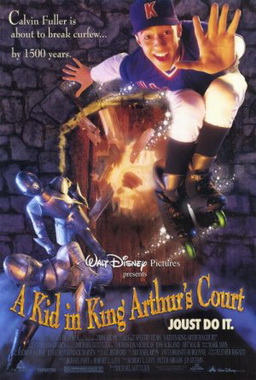
But this isn't an isolated thing. Thor is a Marvel superhero, Disney's Hercules won four Annie awards in 1997, and any kid in the 2000s who was into trading card games could tell you that Yu-Gi-Oh! superficially claimed to have an ancient Egyptian theme. The integrity of the original material in all of these is patchy at best, but they stick in our imagination, anyway. They're just grounded in pre-existing narratives enough to be vaguely familiar, and therefore meaningful. No matter how much Arthurian scholars writhe at A Kid in King Arthur's Court.

He was no Connecticut Yankee, that's for sure.

I think we can look at Sherlock Holmes to see this kind of thing in action again. Sherlock Holmes is the fictional character who has been portrayed by the greatest number of actors. There's been dozens of TV shows, from Cushing to Brett, to now Cumberbach. There's been movies to suit every generation, the most recent featuring a garrulous Robert Downey Jr. There's been Japanese anime series, from Sherlock Hound, several episodes of which were directed by Hayao Miyazaki, and Case Closed, with a protagonist inspired by Doyle's tales. There's been western animation: Disney's The Great Mouse Detective, and a DIC series Sherlock Holmes in the 22nd Century. This is to say nothing of the vast library of literary Sherlockania stretching back even to before the ink was dry on half of Doyle's original serials. Star Trek was on Sherlock, too, giving us the lovely image of Lieutenant Commander Data in a deerstalker hat.

Marvelous.

I think it is safe to say that humans will repeat what they like, and things become part of our mythology because we like them.

This raises another interesting connection, however: what is the difference between these adaptations, and the much-mocked, lowly fan fiction story.

I would argue that all of these things are actually fan fiction, too. Only that money has gone into their making, that they have been published and so are accessible and therefore respectable to audiences to consume, and that Sherlock Holmes and mythological sources are in the public domain and therefore there is no issue of copyright.

But fan fiction's a post (or series of posts, or a series of series of posts!) in of itself. For now, we'll content ourselves with the fact that in several hundred years there probably will be rampant and unchecked retellings of Star Wars and Titanic. We will probably be very happy we didn't live to see them.
More about → Real Modern Day Myths

LINK: Showcase creativity, not racism, this halloween

Posted by Alexandra Salazar on Saturday, October 12, 2013

You really shouldn't have to ask why you can't dress like a 'Gypsy,' an 'Indian' or 'a Mexican in a sombrero,' a 'tribal person,' a 'tiki person,' or wear blackface when Halloween comes around.

But here's a reminder if you do have to, or if you want to know why.

The fact that we can thoughtlessly steal and regurgitate the images of cultures and peoples until they are a generic, meaningless mush is one of our media's least beautiful legacies: cultural appropriation. The Mass Media summarizes it thus,
Look at the models wearing those costumes. They all feature people who look pretty Anglo. They are literally playing dress-up, using another culture as a costume.
“We’re paying respect to other cultures,” some may argue. No, you’re not. If you genuinely wanted to show respect to another culture, you’d do it on a day that isn’t reserved for shenanigans and soliciting treats from strangers.
Our media is dominated by white, male, heterosexual voices. This is undeniable. But it can also lead people to internalizing that white, male, heterosexual narrative as part of their mythology without even noticing. White people don't have to think about how their culture is pictured as a savage or as minstrels. Male people don't have to think about how degrading it is to be presented nothing but revealing, straight-male-gaze inducing clothing as costume options. Straight people don't have to think about how queerness is dismissed as either clownish or threatening.

But we should think about this, because do we really want our mythology to be looked back on like this? 
More about → LINK: Showcase creativity, not racism, this halloween

Feeding the Trolls: Social Media in Politics

Posted by Alexandra Salazar on Friday, October 11, 2013

Anyone who has ever had access to comment boxes, discussion threads, or any kind of unmoderated forum knows what trolls are. Well, maybe not everybody; the definition's been a bit muddied, but the original one is still good: someone who posts inflammatory or obviously attention-seeking opinions with the intention to incite an angered response or backlash.

A troll draws near! (But ignore it, it's probably a cry for attention)

The point being, the poster is not sincere. A troll is not a troll when they sincerely spit a bad or stupid idea and then try to defend it with 'just trolling,' that's just an ordinary bigot that also happens to be a coward.

However, in a landscape of political conflict, trolling seems to have a new stage: a paid stage. In India, there are individuals recruited to endorse a political party on social networks by attacking opposing party speech:
Arjun, who joined Twitter in 2010, started actively tweeting in June 2011 - primarily sharing his views music, sports, recent events, life and politics. His tryst with political trolls started the day he tweeted some information about the Gujarat CM Narendra Modi.
As Arjun started taking these trolls head on, he realized that his follower count was increasing dramatically. It didn't take long for some prominent political leaders to start 'following' him and engaging in chats with him. After his tweets got featured on a television debate, he was approached by the 'recruiters'. 
Their proposition was very simple. He was asked to write blogs promoting the party's agenda and policies. In return, he was promised up to Rs 10,000 or more per blog depending on the word limit. While journalists are often termed as 'paid media', concept of 'paid trolls' is still considered to be an urban myth.
It's no secret that in the USA, social media was a huge point of force in the 2012 presidential election, and yet its power is still dismissed with the fact that some people tweet pictures of their lunch. How long until the trolls are actually fed - and clothed - by real money for their efforts?
More about → Feeding the Trolls: Social Media in Politics

Link: Blaming Rape Culture on Social Media

Posted by Alexandra Salazar on Thursday, October 10, 2013

Thinkprogress' Tara Culp-Ressler reports on the blaming of rape culture on social media. Every media major and sociology major who reads it groans (or ought to groan) in recognition and agreement:
The takeaway from these students’ comments is that it was a very bad decision to put these things on the internet. Their statements aren’t actually condemnations of the attitudes that fuel rape culture in the first place, or expressions of horror that some women at the university have likely been subjected to these “rapebait” strategies. They’re expressions of concern that the frat brother has attached his name to something that fraternities are supposed to keep behind closed doors, something that might hurt his job prospects in the future.
Blaming social ills on modern media, technology, or progress is nothing new. No, really. It is not new. It is literally one of the oldest things that people have done.
"Times are bad. Children no longer obey their parents, and everyone is writing a book." - Marcus Tullius Cicero (106-43 BC)
While it is true that social media reflects the social climate, and may be used to promote rape culture, rape culture is older than social media. It's a part of patriarchal dominance of culture and has only found a new expression, not a revival. There was no death of rape culture to begin with. It's not new.

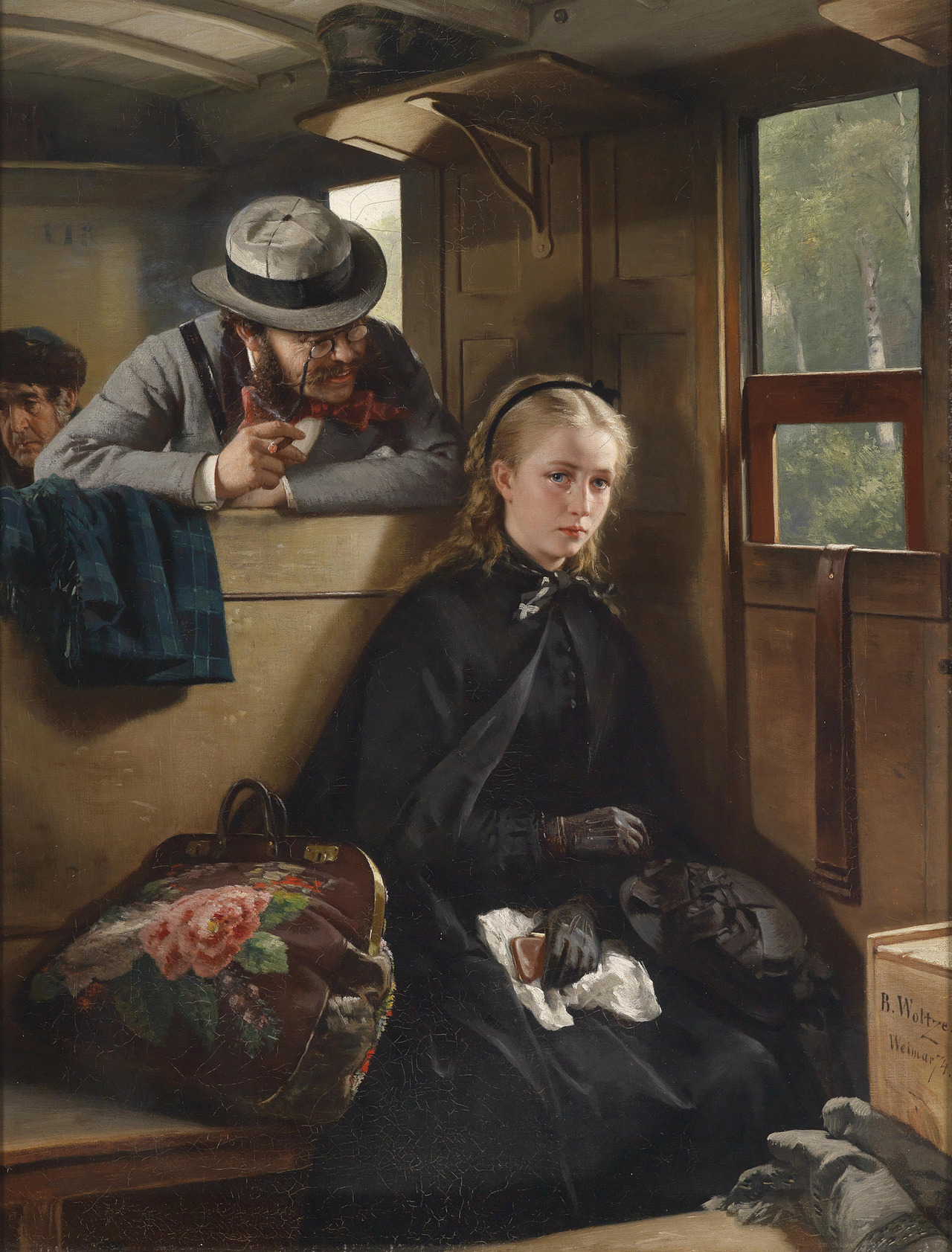
The Irritating Gentleman, Berthold Woltze, 1874. This young woman is probably in mourning, and this man still thinks she ought to give him a smile or respond to his catcall anyway.

It's been proven that blaming violence on comic books wasn't scientific or at all supported by reality. Violence predates comic books, certainly. Sexism and a culture that endorses sexual harassment are also older than our modern media.

They might even be older than Cicero.
More about → Link: Blaming Rape Culture on Social Media

Link: Demanding Representation of Black Girl Nerds in Geek Culture

Posted by Alexandra Salazar on Wednesday, October 9, 2013

When Chaka Cumberbach asks her readers to name some black female superheroes, she mentions that the nerdiest among us might forgo Storm and remember Bumblebee, Nubia, or Misty Knight. However, for anybody less comics-savvy, those names are probably unknown.

True fact about me: When I was little, I thought Storm was the coolest of the X-men and I don't redact this at all today.

She also relates her own childhood as a black female nerd, and connects the issues. It's a fact that mass media doesn't adequately represent women of color. But what is the impact of this narrative, that your heroes don't look like you, on the people growing up listening to it?
We’re given so few characters that I’ve always felt that if I wanted more, I had to be grateful for what I’d been given and put my money where my mouth is. But I’m not going to lie –- that strategy doesn’t seem to be working. I’m getting really tired of just accepting whatever scraps are thrown our way. I’m completely over struggling to find the silver lining in an obvious token black character while on the other end of the spectrum, people who have never had to think about finding racial representation in popular culture feel justified in raising hell over color blind casting in a sea of predominately diversity starved movies -– yeah, I’m looking at you, people who acted like Rue’s casting in the Hunger Games was a personal slight but interestingly enough seemed completely OK with the damn near catastrophic white washing in "Avatar: The Last Airbender."
It's a fact that watching television reduces self esteem in children for every demographic except white males. And yet, the stereotype of a 'nerd' is a white male. Is it any wonder that many 'nerdy' or 'geeky' culture artifacts are media-based, then? Is it any mystery that these media-heavy cultures are exclusionary to women of color, when it's so difficult to like what you like without feeling awful about it, unless you're the dominant cultural demographic?


More about → Link: Demanding Representation of Black Girl Nerds in Geek Culture